Lab-Tested Psychedelics: Why Purity Testing Matters for Canadian Buyers
In an ideal world, every substance would be exactly what it claims to be. But in the complex and often unregulated market of psychedelics, what you see isn’t always what you get. For Canadians seeking to explore the potential of these compounds, the question of purity is not just a matter of quality—it’s a critical issue of safety. With the alarming rise of potent and dangerous adulterants like fentanyl, understanding the importance of lab-tested psychedelics has never been more vital. This is where the conversation about harm reduction truly begins, and it starts with a simple but powerful tool: information. At AstroBuzz, we believe that education is the cornerstone of safe and responsible use, which is why we are committed to providing not only lab-tested products but also the knowledge you need to make informed decisions about your well-being. This deep dive will explore the world of psychedelic purity testing, from the risks of contaminants to the science of verification, empowering you to navigate the Canadian market with confidence.
Key Takeaways
- The Problem of Adulteration: The unregulated drug market is rife with contaminants, including the highly dangerous synthetic opioid fentanyl, which is often found in substances like cocaine, MDMA, and ketamine.
- Lab Testing is the Gold Standard: While at-home reagent kits can provide a basic level of screening, they are not a substitute for professional laboratory analysis. Techniques like Gas Chromatography-Mass Spectrometry (GC-MS) offer the most accurate and comprehensive assessment of a substance’s purity and composition.
- Understanding Lab Certificates: Reputable suppliers of lab-tested psychedelics will provide a Certificate of Analysis (CoA) for their products. This document details the tested substance’s potency and confirms the absence of harmful adulterants.
- AstroBuzz’s Commitment to Safety: At AstroBuzz, we prioritize your safety by subjecting all of our products to rigorous third-party lab testing. We provide our customers with access to these lab reports, ensuring complete transparency and peace of mind.
The Unseen Dangers: What’s Really in Street Psychedelics?
When you purchase psychedelics from an unregulated source, you’re stepping into a world of uncertainty. The substance you believe you’re buying could be something else entirely, or it could be contaminated with a host of other, more dangerous drugs. This is not a scare tactic; it’s a documented reality of the illicit drug market. The primary motivation for this deception is economic. It is far cheaper to produce and sell a counterfeit substance than it is to source and sell the real thing. This economic reality has led to a proliferation of dangerous adulterants in the Canadian drug supply.
The Fentanyl Crisis: A Deadly Contaminant
Fentanyl is a synthetic opioid that is 50 to 100 times more potent than morphine. It is incredibly cheap to produce and is often used as a cutting agent in other drugs to increase their perceived potency and profitability. The presence of fentanyl in drugs like [LINK: /product-category/cocaine/], MDMA, and ketamine is a growing public health crisis in Canada. According to the Public Health Agency of Canada, there were over 8,000 apparent opioid toxicity deaths in 2022, with fentanyl being implicated in a significant majority of these cases. The danger of fentanyl lies in its potency; a lethal dose can be as small as two milligrams, an amount that is virtually invisible to the naked eye. For individuals who do not have a tolerance to opioids, accidental exposure to fentanyl can be fatal.
NBOMes and Other Dangerous Substitutes
Another common group of adulterants found in the psychedelic market are NBOMes (N-benzyl-oxy-methoxy-ethyl). These are a class of synthetic phenethylamines that are often sold as LSD due to their similar appearance and hallucinogenic effects. However, NBOMes are far more dangerous than LSD. They have a much narrower safety profile and have been associated with a range of serious health effects, including seizures, heart failure, and death. Unlike LSD, which has no known lethal dose, NBOMes can be fatal even at what might be considered a recreational dose. One of the tell-tale signs of an NBOMe is a strong, bitter, metallic taste, whereas real LSD is tasteless. However, this is not a foolproof method of identification, and the only way to be certain of a substance’s identity is through testing.
Fillers, Bulking Agents, and Unknown Compounds
Beyond the immediate dangers of fentanyl and NBOMes, street psychedelics can also contain a variety of other undesirable substances. These can include everything from inert fillers and bulking agents designed to increase the weight and volume of a product, to other, less common research chemicals with unknown and potentially harmful effects. The presence of these substances not only means that you are not getting what you paid for, but it also introduces a range of unknown variables into your experience. This is why purity testing is so essential; it allows you to know exactly what you are consuming, and to avoid the risks associated with the unknown.
Know Your Source: Methods for Psychedelic Purity Testing
Given the risks associated with the unregulated market, how can consumers ensure the purity and safety of their psychedelic products? The answer lies in testing. There are two primary methods for testing psychedelics: at-home reagent kits and professional laboratory analysis. While both have their place in a harm reduction framework, they offer vastly different levels of accuracy and detail.
At-Home Testing: Reagent Kits
Reagent test kits are a popular and accessible tool for basic substance identification. These kits contain chemical reagents that change color when they come into contact with specific substances. For example, the Ehrlich reagent will turn purple in the presence of LSD, while the Marquis reagent can help to identify the presence of MDMA or amphetamines. These kits are a valuable first line of defense, as they can help you to quickly and easily determine if a substance is what it is purported to be. However, it is crucial to understand their limitations. Reagent tests are qualitative, not quantitative. This means that they can tell you if a particular substance is present, but they cannot tell you how much of that substance is present, nor can they identify the presence of multiple substances in a single sample. They are a useful tool for screening, but they are not a substitute for comprehensive laboratory analysis. If you are interested in learning more about at-home testing, you can find a variety of [LINK: /product-category/testing-kits/] on our website.
The Gold Standard: Laboratory Testing
For a truly comprehensive understanding of a substance’s composition, laboratory testing is the only way to go. Professional labs use sophisticated analytical techniques to provide a detailed breakdown of a sample’s contents, including its purity, potency, and the presence of any adulterants. Two of the most common and reliable methods used in laboratory testing are Gas Chromatography-Mass Spectrometry (GC-MS) and High-Performance Liquid Chromatography (HPLC).
Gas Chromatography-Mass Spectrometry (GC-MS)
GC-MS is a powerful analytical technique that is widely considered the gold standard for substance identification. The process begins with gas chromatography, which separates the different components of a sample based on their chemical properties. Once separated, the components are then passed through a mass spectrometer, which bombards them with electrons and analyzes the resulting fragments. By measuring the mass-to-charge ratio of these fragments, the mass spectrometer can create a unique chemical fingerprint for each component, allowing for its precise identification. GC-MS is incredibly sensitive and can detect even trace amounts of a substance, making it an invaluable tool for identifying contaminants and adulterants.
High-Performance Liquid Chromatography (HPLC)
HPLC is another highly accurate analytical method that is often used to determine the potency of a substance. Like GC-MS, HPLC also separates the components of a sample, but it does so using a liquid solvent instead of a gas. As the separated components pass through the detector, their concentration is measured, providing a precise quantification of the active ingredient in the sample. This is particularly important for ensuring accurate dosing, as the potency of psychedelic substances can vary widely.
AstroBuzz’s Commitment to Purity: Our Testing Process
At AstroBuzz, we believe that you have the right to know exactly what you’re putting into your body. That’s why we’ve made transparency and rigorous testing the cornerstones of our business. We are committed to providing our customers with the highest quality, lab-tested psychedelic products in Canada. To achieve this, we have implemented a comprehensive testing protocol that ensures the purity and potency of every product we sell.
We partner with accredited, third-party laboratories that specialize in the analysis of controlled substances. These labs use the same state-of-the-art instrumentation and methodologies, including GC-MS and HPLC, that are used in forensic and clinical toxicology. This allows us to provide you with a detailed Certificate of Analysis (CoA) for every batch of every product we carry. This commitment to third-party verification is our promise to you that our products are what we say they are, and that they are free from harmful adulterants.
What Our Lab Certificates Show
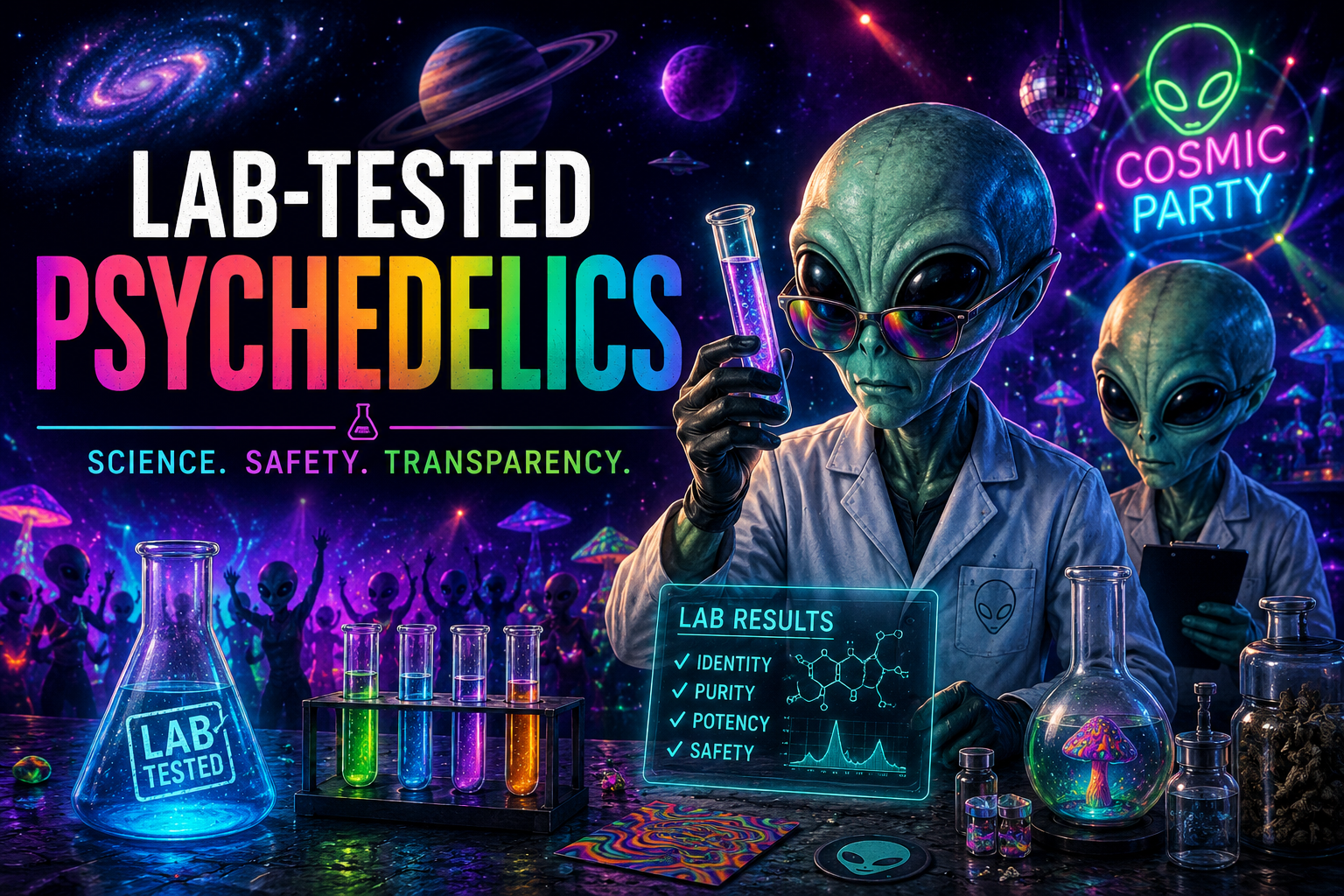
We understand that lab certificates can be intimidating to look at, but they contain a wealth of important information. When you view a CoA for one of our products, you will find a detailed breakdown of its contents. This includes the precise potency of the active ingredient, allowing you to dose with confidence. For example, when you purchase one of our [LINK: /product/lsd-blotters/], the CoA will tell you the exact microgram dosage of each blotter. The certificate will also provide a comprehensive screening for a wide range of common adulterants and contaminants, including fentanyl, NBOMes, and other harmful substances. We make these lab reports readily available on our product pages, so you can review the results for yourself before you make a purchase. This level of transparency is our commitment to your safety and well-being.
Making Informed Choices for Harm Reduction
The decision to use psychedelics is a personal one, and it should be approached with a commitment to harm reduction. In an unregulated market, the most powerful tool you have at your disposal is knowledge. By understanding the risks of adulteration and the importance of purity testing, you can make informed choices that prioritize your safety and well-being. Choosing to purchase from a supplier that provides comprehensive, third-party lab testing is the single most effective step you can take to mitigate the risks associated with the illicit drug market. It is a choice to value your health and to demand a higher standard of transparency and accountability from your source.
Frequently Asked Questions (FAQ)
What’s the difference between a reagent test and a lab test?
A reagent test is a simple, at-home test that uses a chemical reaction to indicate the presence of a specific substance. It’s a useful screening tool, but it’s qualitative, not quantitative. This means it can’t tell you the purity or potency of a substance, and it can’t identify multiple substances in a sample. A lab test, on the other hand, is a comprehensive analysis performed in a professional laboratory using advanced techniques like GC-MS and HPLC. It provides a detailed breakdown of a substance’s composition, including its purity, potency, and the presence of any adulterants.
How can I be sure AstroBuzz’s lab results are legitimate?
We understand the importance of trust and transparency. That’s why we use accredited, third-party laboratories to test our products. These are independent labs with no affiliation to AstroBuzz, and they are held to the highest standards of scientific accuracy and integrity. We make the full lab reports available on our product pages, so you can review the results for yourself and verify their authenticity.
Does lab testing guarantee safety?
While lab testing is the most effective way to ensure the purity and potency of a substance, it’s important to remember that no drug use is entirely without risk. Psychedelics are powerful substances that can have profound effects on the mind and body. Lab testing can eliminate the risks associated with adulterants and inaccurate dosing, but it cannot eliminate the inherent risks of the substance itself. We encourage all of our customers to approach psychedelic use with caution, to start with a low dose, and to be mindful of their set and setting.
Your Safety is Our Priority
In a world where the illicit drug market is fraught with uncertainty, knowledge is not just power—it is protection. The journey into the world of psychedelics should be one of discovery and growth, not one of fear and risk. By understanding the critical importance of purity testing, you are taking a vital step towards ensuring your own safety. At AstroBuzz, we are proud to be a part of this new era of transparency and accountability. We believe that everyone deserves to know exactly what they are consuming, and we are committed to providing you with the highest quality, lab-tested psychedelic products in Canada.
Ready to explore the world of psychedelics with confidence? Browse our extensive selection of products today and experience the peace of mind that comes with knowing your products are pure, potent, and safe. Don’t forget to use the promo code ASTRO20 at checkout to receive 20% off your first order.