
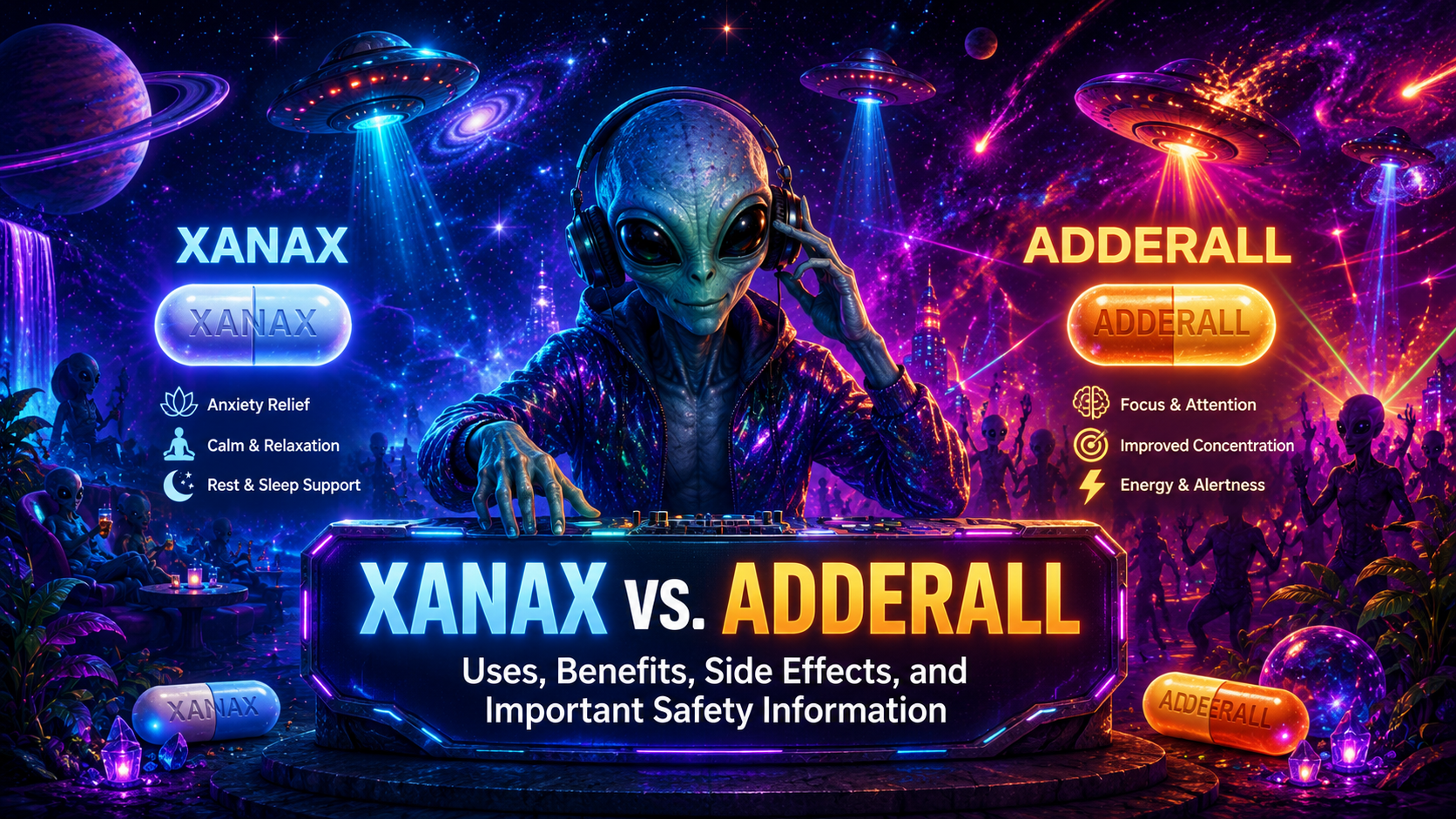
Xanax vs. Adderall: Uses, Benefits, Side Effects, and Important Safety Information
Xanax and Adderall Explained: How These Medications Differ
Xanax and Adderall are two widely recognized prescription medications, but they are designed to treat very different conditions and affect the brain in different ways.
Xanax, the brand name for alprazolam, is a benzodiazepine commonly prescribed for anxiety and panic disorders. Adderall contains mixed amphetamine salts and is primarily prescribed for attention-deficit/hyperactivity disorder (ADHD) and narcolepsy.
When prescribed for an appropriate medical condition and taken under professional supervision, either medication may improve a person’s symptoms and daily functioning. However, both medications can cause side effects and carry risks related to misuse, tolerance, dependence, and withdrawal.
In this AstroBuzz guide, we explore how Xanax and Adderall work, their medical uses, potential therapeutic benefits, common side effects, and essential safety considerations.
Medical disclaimer: This article is intended for general educational purposes only. It is not a substitute for medical advice, diagnosis, or treatment from a qualified healthcare professional.
Table of Contents
- What Are Xanax and Adderall?
- Potential Medical and Mental Health Benefits
- Side Effects, Risks, and Safety Precautions
- Frequently Asked Questions
1. What Are Xanax and Adderall?
What Is Xanax?
Xanax is the brand name for alprazolam, a prescription medication belonging to the benzodiazepine class.
It may be prescribed for:
- Generalized anxiety disorder
- Panic disorder
- Short-term management of severe anxiety symptoms
Xanax increases the effects of gamma-aminobutyric acid, also known as GABA. GABA is a neurotransmitter that helps calm excessive activity in the brain and nervous system.
By enhancing GABA activity, Xanax may reduce feelings of panic, intense anxiety, nervous tension, and certain physical symptoms associated with anxiety.
What Is Adderall?
Adderall is a prescription stimulant made from a combination of amphetamine salts.
It is commonly prescribed for:
- Attention-deficit/hyperactivity disorder
- Narcolepsy
Adderall increases the activity of dopamine and norepinephrine, two neurotransmitters involved in concentration, alertness, motivation, impulse control, and executive functioning.
For people diagnosed with ADHD, this may support improved focus, organization, and task completion.
Xanax vs. Adderall at a Glance
| Feature | Xanax | Adderall |
|---|---|---|
| Generic name | Alprazolam | Mixed amphetamine salts |
| Medication class | Benzodiazepine | Central nervous system stimulant |
| Primary uses | Anxiety and panic disorders | ADHD and narcolepsy |
| Main neurotransmitters affected | GABA | Dopamine and norepinephrine |
| General effect | Calming and sedating | Stimulating and focus-supporting |
| Prescription required | Yes | Yes |
| Controlled substance | Yes | Yes |
How Do They Affect the Brain?
Xanax and Adderall influence the central nervous system in nearly opposite ways.
Xanax reduces excessive nervous-system activity. Its calming effects may help relieve severe anxiety, panic, and physical tension.
Adderall activates specific brain pathways. For individuals with ADHD, this may support attention, working memory, impulse control, and organization.
Because the medications work differently and treat different conditions, they are not interchangeable.
2. Potential Medical and Mental Health Benefits
Potential Benefits of Xanax When Prescribed
For someone diagnosed with an appropriate anxiety or panic disorder, Xanax may help:
- Reduce severe or sudden anxiety
- Decrease the intensity of panic attacks
- Relieve nervous tension
- Reduce anxiety-related trembling or rapid heartbeat
- Improve short-term functioning during periods of severe distress
- Support sleep when anxiety is the main cause of restlessness
Xanax is generally used cautiously because tolerance and physical dependence may develop, especially with frequent or prolonged use.
Potential Benefits of Adderall When Prescribed
For individuals diagnosed with ADHD, Adderall may help improve:
- Sustained attention
- Concentration
- Organization
- Task completion
- Working memory
- Time management
- Impulse control
- Motivation
- Academic functioning
- Workplace performance
These benefits are most relevant to people with a diagnosed medical condition. Adderall should not be viewed as a general intelligence enhancer or productivity booster.
Potential Quality-of-Life Improvements
When an appropriate medication successfully manages symptoms, treatment may contribute to:
- Improved performance at work or school
- Reduced emotional distress
- Better organization and consistency
- Healthier relationships
- Increased independence
- Improved ability to manage daily responsibilities
- Greater confidence in everyday routines
Medication may be most effective when combined with therapy, education, healthy habits, and regular medical follow-ups.
Treatment Goal Comparison
| Treatment goal | Xanax | Adderall |
|---|---|---|
| Reduce severe anxiety | Yes | No |
| Treat panic disorder | Yes | No |
| Improve attention | No | Yes |
| Support concentration | No | Yes |
| Improve executive functioning | No | Yes |
| Treat narcolepsy | No | Yes |
Are Xanax and Adderall “Mental Health Boosters”?
No. These medications are not designed to make healthy individuals happier, more intelligent, or more productive.
They are prescribed to treat symptoms connected to specific diagnosed conditions. Their effectiveness and safety depend on accurate diagnosis, appropriate dosing, ongoing monitoring, and responsible use.
3. Side Effects, Risks, and Safety Precautions
Common Side Effects of Xanax
Possible side effects may include:
- Drowsiness
- Dizziness
- Fatigue
- Slowed reaction time
- Poor balance or coordination
- Memory difficulties
- Reduced concentration
- Confusion
Because Xanax may affect alertness and coordination, people taking it should avoid driving or operating machinery until they understand how the medication affects them.
Common Side Effects of Adderall
Possible side effects may include:
- Reduced appetite
- Dry mouth
- Difficulty sleeping
- Increased heart rate
- Nervousness or restlessness
- Headache
- Irritability
- Increased blood pressure
- Worsening anxiety in some individuals
Some side effects may improve as the body adjusts. Others may require a dosage change or a different treatment approach.
Dependence, Withdrawal, and Misuse
Xanax and Adderall are controlled substances because both can be misused and may cause dependence.
Potential concerns include:
- Physical dependence
- Psychological dependence
- Tolerance
- Misuse
- Sharing or diversion
- Withdrawal symptoms
- Taking more than prescribed
- Combining the medication with other substances
Stopping Xanax suddenly after regular use may cause serious withdrawal symptoms. Abruptly stopping Adderall may also lead to fatigue, sleep changes, low mood, and difficulty concentrating.
Dosage changes or discontinuation should always be discussed with the prescribing healthcare professional.
Essential Safety Practices
Anyone prescribed Xanax or Adderall should:
- Take the medication exactly as directed
- Never increase the dose without medical approval
- Keep the medication securely stored
- Never share it with another person
- Tell the prescriber about all medications and substances being used
- Attend recommended follow-up appointments
- Report severe or unusual side effects
- Avoid abruptly stopping regular treatment
- Discuss alcohol and recreational substance use with a healthcare professional
Xanax can be especially dangerous when combined with opioids, alcohol, sleeping medications, or other sedatives. These combinations may severely slow breathing and increase the risk of overdose, coma, or death.
Risk Comparison
| Consideration | Xanax | Adderall |
|---|---|---|
| Sedation | Common | Uncommon |
| Difficulty sleeping | Less common | Common |
| Appetite suppression | Less common | Common |
| Tolerance may develop | Yes | Possible |
| Physical dependence risk | Yes | Possible |
| Withdrawal symptoms | Yes | Yes |
| Medical monitoring recommended | Yes | Yes |
4. Frequently Asked Questions
Can Xanax and Adderall Be Prescribed Together?
In certain situations, a healthcare professional may prescribe both medications to treat separate diagnosed conditions, such as ADHD and an anxiety disorder.
Because one medication has calming effects and the other is a stimulant, using them together requires careful evaluation, individualized dosing, and ongoing monitoring. They should never be combined without medical guidance.
Is Xanax Used for Depression?
Xanax is not approved as a primary treatment for depression. It is mainly prescribed for anxiety and panic disorders.
Some individuals with depression also experience anxiety, but treatment should be selected by a qualified healthcare professional based on the person’s complete medical history.
Does Adderall Cure ADHD?
No. ADHD is a chronic neurodevelopmental condition.
Adderall may help manage symptoms, but it does not permanently cure ADHD. A complete treatment plan may also include therapy, coaching, education, behavioral strategies, and structured routines.
Which Medication Works Faster?
Xanax generally begins producing calming effects relatively quickly, which is one reason it may be prescribed for acute anxiety or panic symptoms.
The onset and duration of Adderall depend on whether the medication is immediate-release or extended-release, as well as the person’s dosage, metabolism, and treatment plan.
Can Xanax or Adderall Be Used Long-Term?
The appropriate duration of treatment varies based on the diagnosis, response to treatment, medical history, and potential risks.
Xanax is often prescribed cautiously because extended use may increase the likelihood of tolerance and dependence. Adderall may be prescribed for longer periods when it remains effective and the patient is regularly monitored.
Long-term treatment with either medication should be reviewed periodically by a healthcare professional.
Is Xanax Addictive?
Xanax can lead to physical dependence, particularly when taken regularly, in higher doses, or for extended periods.
Physical dependence is not always the same as addiction, but both can occur. Xanax should only be taken as prescribed and should not be stopped suddenly without medical supervision.
Does Adderall Increase Intelligence?
No. Adderall does not make a person more intelligent.
For someone with ADHD, it may reduce symptoms that interfere with concentration, organization, and task completion. It is not intended to enhance cognitive performance in individuals without a diagnosed condition.
Can Xanax Help With Sleep?
Xanax may cause drowsiness and may temporarily improve sleep when severe anxiety is the primary source of restlessness.
However, it is not generally considered an ideal long-term treatment for insomnia because of the risks of tolerance, dependence, and withdrawal.
Is Adderall Safe?
Adderall can be an effective treatment for ADHD and narcolepsy when it is appropriately prescribed and medically monitored.
Its safety depends on factors such as dosage, cardiovascular health, medical history, other medications, and whether it is taken exactly as directed.
Can Lifestyle Changes Support Treatment?
Yes. Medication may be only one part of a broader mental-health and wellness plan.
Supportive strategies may include:
- Maintaining a consistent sleep routine
- Exercising regularly
- Eating balanced meals
- Participating in therapy or counselling
- Practising stress-management techniques
- Creating structured daily routines
- Limiting alcohol and other substances
- Attending regular medical appointments
Final Thoughts From AstroBuzz
Xanax and Adderall may both affect the brain, but they serve very different medical purposes. Xanax is primarily prescribed for anxiety and panic disorders, while Adderall is used to manage ADHD and narcolepsy.
Neither medication is free from risk, and neither should be taken without a legitimate prescription and professional medical supervision. Understanding how these medications differ, following the prescribed treatment plan, and communicating openly with a healthcare provider can support safer and more effective treatment.