🧠 Beyond the Buzz: How Psychedelics Are Changing Mental Health Treatment
What We Actually Know
For decades, psychedelics like psilocybin (the active compound in “magic mushrooms”), LSD, and MDMA lived in the cultural shadows — dismissed as dangerous party drugs or relics of the counterculture.
But the tide has turned. Researchers, therapists, and even major medical institutions are now looking at these substances through a very different lens: as potential tools for treating depression, PTSD, addiction, and anxiety.
From Taboo to Therapy
In the 1950s and 60s, psychedelics were actually studied quite seriously in psychiatry — before political backlash shut it all down. Fast forward half a century, and we’re witnessing a scientific renaissance.
Today, Johns Hopkins, NYU, and Imperial College London are leading clinical trials showing that, under guided and controlled conditions, psychedelics can catalyze powerful emotional breakthroughs and long-lasting mental health improvements.
Psilocybin: The “Reset” Button for the Brain
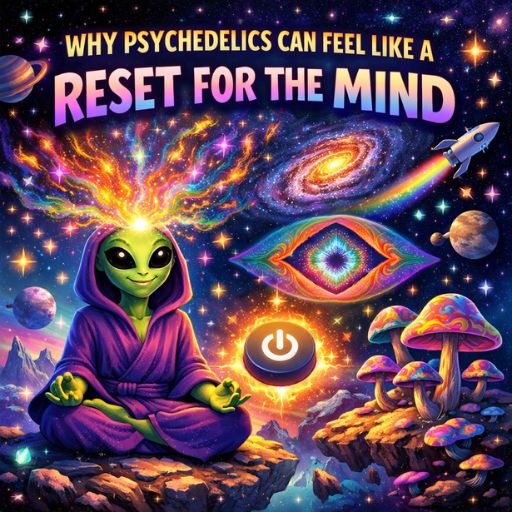
Psilocybin is the star of the psychedelic comeback story. Studies suggest it can help “reset” deeply entrenched neural patterns linked to depression and anxiety. Participants often describe the experience as a “spiritual reboot” — emerging with new perspective and emotional clarity.
MRI scans show reduced activity in the brain’s default mode network, the region associated with rumination and self-criticism — offering a scientific window into why many feel relief after a guided trip.
MDMA: Rewiring Trauma
MDMA (commonly known as Ecstasy or Molly) isn’t a traditional psychedelic, but it’s been making headlines for its groundbreaking results in PTSD treatment. In clinical settings, MDMA helps patients revisit traumatic memories with reduced fear and heightened compassion — allowing genuine emotional processing.
The Multidisciplinary Association for Psychedelic Studies (MAPS) has led the charge here, and results are so promising that MDMA-assisted therapy is on track for potential FDA approval in the near future.
LSD: The Original Mind Expander
While LSD hasn’t received as much clinical attention lately as psilocybin or MDMA, it remains a cornerstone of psychedelic research. Early studies show it may enhance openness, creativity, and cognitive flexibility — qualities that can be therapeutic when integrated properly.
Modern microdosing trends trace their roots back to LSD research, though science still hasn’t fully confirmed the claims around its day-to-day performance benefits.
The Caveats (and the Hype)
Let’s be clear: psychedelics aren’t miracle cures. They’re powerful tools that require structure, psychological support, and medical oversight. Self-experimentation outside controlled environments can be unpredictable — and sometimes counterproductive.
The real magic lies not in the substance alone, but in the set and setting: mindset, intention, and guided integration after the experience.
Where the Future Is Headed
Governments are slowly catching up. Oregon has legalized supervised psilocybin therapy; other states and countries are exploring similar models. Venture capital and biotech startups are rushing in, hoping to create standardized psychedelic medicines for clinical use.
Still, ethical questions loom: Who gets access? How do we protect sacred indigenous practices from commodification? Can we maintain the soul of the experience in a system that loves to package everything into a pill?
The Takeaway
Psychedelics are no longer fringe — they’re reshaping how we think about healing, consciousness, and the human mind itself. As science continues to bridge ancient wisdom with modern psychiatry, one thing’s clear:
The trip has only just begun. 🌈